
Five days in Lisbon, Sintra, and Belém — thoughtfully curated by a local guide so you can discover what most tourists miss.
You came to Lisbon to find the version of Portugal most people fly past on their way to the palace photos — and then you booked the palaces too, because you know the difference between avoiding the obvious and just being difficult about it.
Day 1
Theme
Alfama, the hilltop, and the oldest stones in the city
Morning
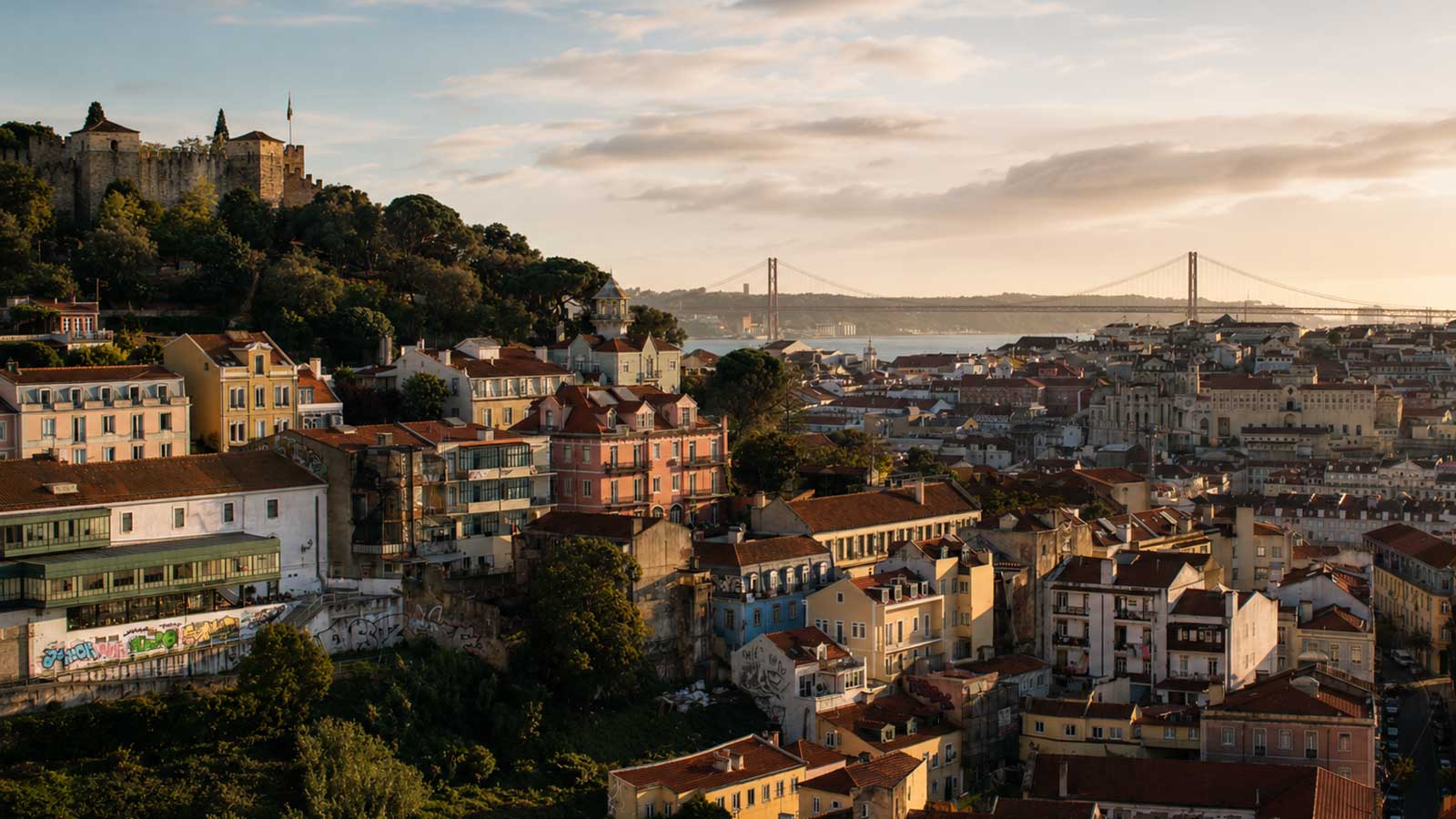
Start in Alfama early, before the tuk-tuks start their circuits. The neighborhood rewards a slow walk uphill — narrow lanes, laundry overhead, cats on window ledges, tiles everywhere. Work your way up toward Castelo de São Jorge and walk the ramparts for the panorama. Then follow your nose back down toward Lisbon Cathedral, the city's oldest church — Romanesque nave, fortress-like facade, started in 1147. Entrance to the cathedral is around $5, castle around $15.
Cross town to Carmo Archaeological Museum — a 14th-century convent left roofless by the 1755 earthquake, now housing a genuinely strange collection: mummies, pre-Columbian artifacts, a room that feels like a cabinet of curiosities someone forgot to label. From the exit, walk a few minutes to Igreja de São Roque, which looks plain from the outside and then hits you with one of the most excessive baroque interiors on the continent. Free to enter. Budget a couple of hours total, about $10 for Carmo.
End the day at Miradouro de São Pedro de Alcântara for the view over the city at dusk — Alfama's castle lit up to the east, the river below, the castle you just walked across in the morning. Then dinner at O Faia - Casa de Fado in Bairro Alto, established 1947, still serving live fado every night alongside contemporary Portuguese food. Reserve ahead. Around $50–60/person with wine.
R. da Barroca 54 56, Bairro Alto, 1200-050 Lisboa, Portugal
Why this fits: you want to move fast and know why you're looking at things — so the day opens with the city's oldest layers and ends with its most rooted musical tradition.
Day 2
Theme
Sintra — palaces, wells, and the edge of the continent
Morning
Take the train from Rossio — the Neo-Manueline station that's worth five minutes of its own before you board. The ride to Sintra is about 40 minutes. Head straight to Quinta da Regaleira when it opens at 10am — book tickets in advance, arrive early, and go directly to the Initiation Well before the line forms. It's a spiral staircase descending nine stories into the earth, built for Masonic ritual and completely unlike anything else in Portugal. About $15/person.
Quinta da Regaleira, R. Barbosa du Bocage 9, 2710-567 Sintra, Portugal
Afternoon
Walk up to National Palace of Pena — the colors are ludicrous in the best way, a Romantic-era fantasy palace perched above the clouds. Pre-book tickets and arrive before your entry window. After, if you have the legs, loop down through Parque da Pena toward Palácio e Parque Biester for a quieter wander — the grounds are less trafficked and the architecture is its own reward. Around $20 for Pena.
Stop into National Palace of Sintra before it closes — those twin conical chimneys have been visible from the hills all day, and the interior delivers a Gothic-Manueline-Moorish architectural conversation that rewards the entry fee ($10). Dinner in the village before catching the last comfortable train back to Lisbon. Sintra's restaurants are geared toward day-trippers, so eat early or keep it simple — grilled fish, local wine, around $30–40/person.
Largo Rainha Dona Amélia, 2710-616 Sintra, Portugal
Why this fits: you push hard on days with a lot of ground to cover, and Sintra rewards the traveler who arrives prepared and moves with intent instead of waiting for things to happen to them.
Day 3
Theme
Belém — empire, monuments, and the pastry you've heard about
Morning
Take a rideshare or the tram to Belém and arrive early at Jerónimos Monastery — it opens at 9:30am and the cloister is best before tour groups fill it. Manueline architecture at full stretch: carved stone that looks like maritime rope and coral and celestial spheres twisted together. Walk the Praça do Império Garden after, the wide formal garden that anchors the whole district. Then head to Pastéis de Belém — the original custard tart bakery, established 1837, the line moves, and nothing you've had before tastes like these do when they're still warm. About $3–5 for a round of pastéis.
Walk the riverside to the Monument to the Discoveries — 32 figures of explorers and navigators carved in white limestone, with a panoramic terrace at the top worth the climb. Then the Belém Tower, standing directly on the Tagus, built between 1514 and 1520 as Portugal was rewriting the world map. Entrance about $8–12 each. Finish the afternoon at MAAT - Museum of Art, Architecture and Technology — a curved white building along the waterfront with strong architecture and a rotating contemporary program that tends to punch harder than expected. Around $10.
Wander over to Doca de Santo Amaro for a drink at sunset — the 25 de Abril Bridge hangs over you, enormous and orange, water below. Then head to LxFactory for dinner — a former textile factory turned creative complex with a handful of serious restaurants, independent shops, and the kind of atmosphere that didn't exist here fifteen years ago. Dinner around $35–55/person depending on where you land.
R. Rodrigues de Faria 103 Piso 3, 1300-501 Lisboa, Portugal
Why this fits: you came here with the context loaded — the Age of Discovery isn't just a plaque to you, it's the reason everything from the monastery to the tower exists — so the day functions as one long thread you can pull.
Day 4
Theme
Sintra's wilder side — Monserrate, Cape Roca, and space to breathe
Morning
Rent a car or take a taxi out to Park and Palace of Monserrate — the one most visitors skip because it's a few kilometers past the main palaces. Romantic-era palace with Moorish and Gothic and Italian architectural DNA all twisted together, set inside botanical gardens that collect rare species from across the former empire. Quieter than anywhere you visited on Day 2. Around $10 entry. On the way back, stop at Villa Sassetti — free to enter, small terraced gardens stepping down toward Sintra, views into the hills, almost no one here.
Drive out to Cape Roca — the westernmost point of continental Europe. Stand on the cliff. The Atlantic is in front of you and there's nothing between you and North America. It's windswept and raw and there's a lighthouse and a dramatic drop to the water. The Parque Natural de Sintra-Cascais surrounds it — the coastal scrubland walking trails here are underused and worth an hour if you want to push further along the clifftops. Free.
Head back into Lisbon and close out the night at Praça do Comércio as the light leaves the river — the square opens directly onto the Tagus, arched and vast, and it looks completely different after dark than during the day. For a late drink with an actual view, Wine With a View - Torre de Belém does cocktails and local wines with the tower right there in the frame. Then dinner at Maria da Mouraria - Casa de Fados in the Mouraria district — the house of legendary fado singer Maria Severa, still serving live performances Wednesday through Sunday. Reserve in advance. Around $45–60/person.
Largo da Severa 1 e 2, Lgo da Severa 2, 1100-588 Lisboa, Portugal
Why this fits: you hit the big sites prepared and early, but the best version of a Sintra day for you includes the places people skip and the thing that stops you at the edge of something genuinely large.
Day 5
Theme
The earthquake, the hilltop, and a long final evening
Morning
Start at the Quake - Lisbon Earthquake Centre — a museum built around the 1755 earthquake that destroyed most of Lisbon. It's experiential and well-built, and it explains the architecture of the whole city you've been walking through: why the Baixa looks the way it does, why the Marquês de Pombal looms over the city, why there's almost nothing medieval left. About $15. Walk afterward through the Baixa-Chiado district, now making much more sense than it did before.
Rua do Cais da Alfândega Velha 39, 1300-598 Lisboa, Portugal
Afternoon
Head up to Príncipe Real for a slower few hours. The Principe Real Garden sits in the middle of the neighborhood's antique dealers and independent bookshops — a giant century-old cedar tree in the center with a canopy wide enough to shade a small crowd. Browse, find a late lunch, take the pace down one notch. Then visit the Museu de Lisboa - Teatro Romano before it closes — an archaeological dig of a Roman theater directly underneath a Lisbon street, active and still being excavated, with displays connecting the site to the city's oldest pre-Moorish occupation. Around $3.
A, R. de São Mamede 3 A, 1100-532 Lisboa, Portugal
Evening
Final dinner at Duque da Rua — a fado spot in the Bairro Alto where reservations are worth making ahead of time. Smaller and less formal than the historic houses, still delivering the thing. Afterward, end the night at Pensão Amor on Rua Nova do Carvalho — a former brothel turned velvet-and-books cocktail bar in the Cais do Sodré, the kind of place that's been around long enough to have real character without performing it. Around $40–55/person for dinner, cocktails around $12–15.
R. Nova do Carvalho 38, Cais do Sodre, 1200-019 Lisboa, Portugal
Why this fits: you like a plan that builds — and ending the trip with the earthquake museum, then the Roman theater, then a final night that earns its own story arc is the kind of arc that makes the whole thing land.
What to pack
A compact daypack with a hip belt or chest strap — Sintra's palace-to-palace routes cover serious vertical and you'll want your hands free on the Moorish Castle walls
One layer that looks good at dinner and handles a coastal wind at Cape Roca — a structured linen shirt or lightweight merino earns double duty
Good walking shoes with ankle support, not sneakers — Alfama's cobblestones are genuinely uneven and wet ones are worse
A small notebook or app for tracking what you've visited and what it connected to — the scholarship instinct will want somewhere to put things
A portable charger — long days, lots of maps, and Pena Palace's hillside has no convenient outlets
Worth knowing
Sintra is a time trap. The palaces are spread across several kilometers of vertical terrain and everything takes longer than the map suggests — leave earlier than you think you need to and pre-book every ticket, because Pena especially sells out.
The visual richness of this itinerary is real, but the impulse to see one more thing before it closes is how you end up eating a bad sandwich at 10pm because every restaurant locked their kitchen. Build in a 7pm hard stop for dinner each evening and protect it.
Like the look of this one? Make it yours — every day and every spot is customizable.